External Minds

I was having a lovely daydream the other morning while sipping coffee at my local brasserie – that dreamily overlooks the mountains – when I suddenly found myself being drawn to the conversation going on between two guys at the adjacent table. One of them kept banging on about his son Murray. “Murray this, Murray that…” But it was not because Murray had done anything wrong; quite the opposite, he had become a saint.

The guy was very animated because Murray had changed beyond recognition since being introduced to a new learning method. What drew my attention was his description of Murray drawing on a chalkboard that they had put in his bedroom – that covered the whole side of one wall – with whatever was going on in his head. Instead of sitting terrified, clenching a book, whenever his mum or dad asked him questions about his maths homework that he was unable to answer (the guy enacted the mortifying scene grippingly), young Murray now runs upstairs and writes down what he had just read in a book or seen on the TV onto his chalkboard, using “mind maps, whatever, you know that kind of stuff”.

But it was not just this kind of externalizing that helped, it was also what he did in between his scribbling at the chalkboard. The guy by this time was even more bubbly: “Murray runs up to his bedroom, spends 10 minutes on his chalkboard, then runs around for 10 minutes or bounces a ball, and then goes back to his chalkboard and spends 10 minutes drawing again.”

The physical exercise was central. The chap was also on a roll and my ears pricked up more:

“His test results have gone up from being in the 50s and 60s to being in the 70s and 80s. His whole attitude has changed. He’s all left-brain (poor bastard, he gets that from me), but now he has changed completely. Only this morning he was up at 5.45 a.m. drawing on his wall… His mum and I don’t have to shout at him anymore – which never worked anyway. He just does it on his own. And we have changed, too. We no longer nag him “Murray have you done your maths? Murray have you done your homework?”.

And on and on he went. Just goes to show what a chalkboard and a bouncing ball can do to transform a previously dreaded experience into something that is enjoyable. I’ve always been fascinated with how externalizing one’s thoughts changes one’s thinking and the joy that comes from it. But combining it with running around and bouncing balls has enabled the lad to both embody and externalize, leading to his being proactive and excited by learning.

But it is not just learning that can benefit. Big whiteboards remain a pervasive and persistent technology in many walks of life. Ben, the chef I have got to know at Roganic, uses one in his kitchen to write down his half-baked ideas and notes that inspire his new dishes; Adam, the brilliant wine maker we met in Stellenbosch, has a very large one in his wine farm which he constantly consults to remember what state his fermenting wines are in, and which to mix with which. The large diagram of his cellars provide an external and shared resource that extends his mind and offers cues for inspiration.

Marble Marvel

Part of my dream fellowship is to open my eyes to new possibilities. So when I was invited by my host Gary and his friend Andrew to watch the Chinese Grand Prix with them last Sunday evening, I accepted without reservation. I’ve never had any real interest in Formula 1 before, except listening to the occasional news snippet about Jenson Button winning or Michael Schumacher returning after his retirement. Andrew and Gary, on the other hand, are both hooked on it – and have been since growing up with it – following every race and anticipating what will happen at the next one. During the race, like millions of others worldwide, they enter the F1 zone, gripped by the fate and fortune of the drivers, as the breathtaking action unfolds.

G gave me a little booklet about this season’s teams and drivers, as we were waiting for A to arrive, so I could at least become familiarized with the basics. As I flicked through the pages of handsome chaps and cars, he patiently answered a few of my rookie questions about which team Jenson and Lewis were in, what the sponsor names were of all the teams, how much it cost each year for them to take part and so on. I then found myself looking at a page of tyres and noticed there were six kinds, all lined up in a row with different coloured lines around them, reminding me of licorice allsorts. They are used for different conditions and stages of the race. There are 4 dry-weather ones: super soft (red), soft (yellow), medium (white) and hard (silver) and two wet-weather ones, which have different treads on them, an intermediate and a full-on heavy rain one. The treads help to expel the water on the track when racing in the rain. Apparently, the patterns of the wet tyre treads are mathematically designed to ‘scrub’ the maximum amount of water from the racing track surface in order to get the best possible contact of the tyre and to prevent aqua-planning.

The tyres, I quickly discovered, play a central part in the race but can be highly variable, all of which adds to the excitement. Gary filled me in on more fascinating factoids and I found myself gripped by tyre talk. Geeky or what? All the cars have to use the same Pirelli ones now so there is no unfair advantage. But the drivers have to use both soft and hard during the race and a key team decision is choosing which one to start with. The skill and luck is in selecting the right one at the right time. Use the soft ones first and you could loose ground. Use the hard ones first and you might burn out too quickly.

Instead of air the tyres are filled with nitrogen – this helps them to keep their shape when they get very hot as the cars zip round the circuit and also helps to keep their pressure just so. However, the downside of driving at extremely fast speeds for nearly two hours is that the tyres wear out quickly. Bits of rubber start to ping off the tyres, especially when the drivers are cornering, and trails of rubber debris can be seen accumulating all around the track. These tyre shreds are affectionately known as ‘marbles’. How cute is that?
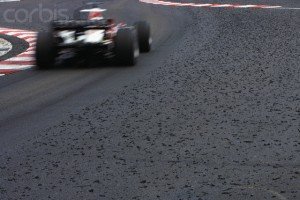
Eventually, the tyres, if continually driven at very fast speeds, will blow or lock. They are designed to last for a maximum of 200 km and so the drivers have to make at least 2 pit stops to change them. Each pit stop obviously takes them out of the race temporarily and so at best, adds 20-30 seconds to their time. The longer they keep driving the tyres the more they keep in the race, but the less grip they have, and the more risk that they will lock or blow. Cut your loses early on and you could gain later on. But it depends on where you are relative to the other drivers, as to the pros and cons. The juggle is whether to change 2 or 3 times, early or late, soft or hard. Each involves different risks and pay-offs. There lies the thrill, deciding which one and when.

We settled in front of the big TV screen and the flag went up. Vroom vroom. The boys got straight into it, watching and commenting on the race, seeing things I didn’t even notice, such as which driver was in front, behind, in the middle, who had just overtaken whom, whether they were in the DRS zone where they can really accelerate, and so on. It was all a bit of a blur for me. Their eyes were on split second detail and mine were on the gestalt. But gradually, I started to see things a little more clearly and by the end of the race, I almost kept up with G and A’s octane talk as the race for second place hotted up. I even piped in a squeak or two – noticing one or two minor details.

The most fascinating part of the race for me was the pit stop. It seems that a race can be won and lost in the pits. Each team has to time their driver’s pit stops strategically to the moment, to try to ensure they minimize lost time on the track while maximizing the opportunities to overtake the cars in front using fresh tyres. It is a time when men and machines have to work in close unison, to perform a “precisely timed, millimetre perfect choreography”. You can’t but marvel at the team’s highly focused attention that ideally takes place during a 2-3 second window when all 4 tyres are switched in sync. 3 mechanics look after each wheel: the first takes off the single nut with an airgun, the second removes the tyre, and the third replaces it with a new tyre and then the first places the nut back on again and then tightens it up, using the airgun.

I watched my first pit stop tyre change in awe. Grown men, in lurid green and white jumpsuits sprung into action: machines pounding, wheels vanishing and arms flapping. I was not sure where to look at first as so much was going on. After watching a few more, I trained my eyes to focus on the action around one wheel and then glance momentarily at the other ends of the car and finally on the moves of the lollipop man (!) stationed at the front of the car. The affectionately called lollipop man refers to the shape of the long sign he holds in front of the car to signal to the driver where to stop and when to start. Just like the marbles – another, sweet naming touch. Men can be boys, too.

Clearly, there is a lot more going on during a pit stop than one pair of eyes can see. Awareness of what each is doing in fast motion is key. One slight fumbling and you blow it for the whole team and millions of dollars literally fly out the window. This happened early on to Michael Schumacher when we were watching the race in Shanghai. One poor soul hadn’t screwed the nut back on properly before the lollipop man had moved his shield, signaling to Michael to accelerate. The mechanic waved his hand somewhat limply to signal all was not well but he knew by then, it was too late. Michael had vanished in a roaring puff back onto the track, all the while his left front wheel wobbling. Too late…Within 5 seconds the race was over for him. Such a tiny margin for error is what makes the race so exhilerating for us, but as G and A noted, it was likely to be the end of the road for the poor sod whose nerves got the better of him when fumbling with the airgun.

I have just been reading Negative Camber’s blog where he describes the pit stops in NASCAR racing as being like ballet. I could not agree more. But unlike the 2-3 stops in F1 they have upwards of 8 to 10 stops and sometimes even more. And it is not just the tyres they change but a whole host of other things, including “making chassis adjustments, others servicing the driver, and so on.” This ‘full service’ take 13-16 seconds rather than the 2-4 seconds for the quick service in F1. Now I know what I should have been watching during my wilderness years living in the american mid-west. And to think one of my female colleagues at Indiana University was really into it and we pooh-poohed her. Luckily, there are many more F1 races to go, next sunday it’s Bahrain.

Safari Lite

Part of the must-do experience in Africa is to go on safari and see wild animals, especially the Big Five; that is the lion, buffalo, leopard, elephant and rhino. The term was originally used by hunters to refer to the most difficult and dangerous animals to hunt by foot, but is now commonly employed by marketing people as a slogan to entice tourists to game reserves and national parks. Many a word has been written about the Big Five, “whether the biggest, the fiercest, or most formidable, these animals are the ones that have the power to remind us of our insignificance in the face of the true kings of the savannas.” William Taylor et al (1999).

The adrenalin-rush of the old days of hunting has been replaced by the thrill of spotting and snapping. If you see a lion with blood on its mouth, leopard cubs playing and a baby elephant being caressed by its mother, all on one trip, you’ve hit the jackpot. Trouble is the Big Five don’t all live naturally in the same part of Africa and so to see them all together, one needs to go to an enclosed park or reserve, where they have been introduced into man-managed and electric-fenced environments.

We went to one of these places and experienced the whole package, with hours sat on an open-topped truck as the sun rose and set and then more hours afterwards by the roaring fire, listening to war stories and unique anecdotes being regaled by fellow travelers and guides. It was only then that I began to really understand the immense pleasure and specialness of being in the presence of such great animals. The ultimate safari is going to the vast savannas of East Africa, such as the Serengeti, and camping out for weeks on end, looking out for the herds in their naturalness, and if lucky, spot a lion mauling the soft parts of a freshly caught springbok. We, however, opted for Safari Lite and spent a couple of days and nights at a luxury lodge that had been built as an integral part of the reserve half way along the Garden Route. In one of its ads, it claims you can see all five in a malaria-free environment. That whetted my appetite and reassured me – being a bit of a wus these days. But they had substituted the leopards with cheetahs while also adding a few giraffes (which don’t normally live there) to the mix, giving us a bonus: five plus one.

On our first foray into the wild we donned big green capes – not for camouflage but because it was raining and windy (it being the start of winter) and we being out in the open for a few hours for each safari stint. We plonked ourselves in the three-tiered seats at the back of the truck that looked a bit like one of Juan Muñoz’s bleacher sculptures.

Six of these strange looking trucks then set off in all directions, each with their own guide/driver at the realm, barking out safety instructions to us and what to look for. Our guide, who looked like a young version of Clint Eastwood, drove us across the terrain in search of rhinos. And it did not take long before he spotted three in a creek. He stopped the truck and turned the engine off so we could see them in all their glory. Instantly and in unison, we raised our telephoto lenses and began shooting image after image of them lolling around, eating and playing with each other, while he bellowed factoid after anecdote about this one of the five. Once satiated, we went off in search of the giraffes. We were not disappointed. One proud mother stood high, shielding her 4 day-old baby. By this point we were incandescent. Our cameras went into overdrive – click, click, click. Being so close to animal greatness – however semi-tame – was special.


And then more feasting followed; with many sightings of other wildlife, including zebras, impalas, springboks, elands, bonteboks and others. We learned the difference between many kinds of deer and antelope.

Seeing a giraffe eating shrubs with its neck bent over was strange. But when it stretched it back up, stood tall, and started chewing and regurgitating against the sunlit backdrop, it was breathtaking. Our guide reassured us that these giraffes had adapted well to their new habitat. The evidence, he said, was in them having babies – the female we spotted had just given birth to one that looked tiny in comparison and awfully cute. But the difference between eating acacia trees and local Fynbos shrubs is that the leaves on a tree start to taste very bitter after about 10 minutes, causing the giraffe to move onto the next one, whereas the shrubs don’t. The bitter leaf taste is caused by the tree releasing tannins to defend itself from being all gobbled up. When it gets too bitter the giraffe moves on to the next tree and so on. This way the trees can survive. The indigenous shrubs, on the other hand, have not had giraffes in their midst and so have not adapted to releasing tannin to defend themselves.

Our minds wondered about how such man-managed ecosystems were able to keep balanced, given these non-adaptations between animal and plant. The trick is in the fencing, the feeding and the numbers. Keeping the animals apart stops them killing each other, which is what they do in the wild but is expensive and messes up the balance in a small reserve. Rhinos and elephants need enormous quantities of food and so are fed with plant fodder brought in from elsewhere.

Our guide was full of juicy pieces of knowledge that helped up build up a complex picture of how a game reserve works as we zig-zagged our way around the many tracks. He even answered, with a Clint-like seriousness, the barrage of one-liners one of our fellow visitors kept asking him about each new animal we saw: what they tasted like and had he ever tasted them. We found out that zebra tastes like cow and rhino and giraffe meat are simply inedible, especially if they are full of testosterone.

Our final encounter was with the lion. As our fellow visitor began asking what lion tasted like, it stood up, looked over at our parked truck and took a mighty pounce towards us. Our guide momentarily lost his Clint-eyed look and revved his vehicle at full pelt. The diesel fumes started pouring out the back of the truck and the wheels started spinning in the mud, as he tried to race up the hill with the lion charging towards us. We really felt the adrenalin then – not least because we were nearest the lion and were totally defenseless. But the smell and sheer quantity of the fumes were bitter enough to stop the lion in its tracks. It then just roared at us as we drove towards the automatic gates.

The lion story will stay with us all, no doubt embellished a little more each time of its telling. But that is the essence of the safari lite experience, just like the memories of a hunt – being able to regale and recapture the beauty and fear of such magical moments.

“Africa’s Big Five” by William Taylor, Gerald Hinde and Richard du Toit (1999)

Seeing More

The Cape of Hope is a ‘beauty spot’ at the southwestern tip of Africa, famous for its dramatic scenery and steeped history. Its magic has captivated travellers for centuries; rugged rocks, sheer cliffs, white beaches, indigenous flora and fauna, stark lighthouses, galloping buck, cheeky baboons and fleeting zebras. When I visited last Sunday, coachloads and buses of excited tourists from all over the world were spewing forth out of their capsules, snaking their way along one of the ‘southern’ most points of Africa. Many were scantily clad and some even covered in garish bling that made us stare and snigger. The contrast been man and nature was stark.

I went with a local artist, H and her 11 year-old granddaughter, Tye who lives nearby. T had an amazing sense of the place, walking the whole time with bare feet, despite the harsh gravel, sharp dust and prickly plants along the paths. As we joined the crowds pounding the well trodden steps slowly rising upwards towards the pinnacle of a lighthouse, a few of our fellow sightseers looked at her feet and started pointing and talking in loud foreign voices. She smiled and leaped passed them like a mountain goat.

Not only did she have gecko-like soles, but radar-scanning eyes, spotting camouflaged creatures before me and her ommi had chance to saccade from the last amazing sighting; fat black lizards sunbathing on the rocks, a bald-headed eagle drifting by, a slinky family of mongese scuttling passed, some dassies hiding in the rocks (that look like a cross between a rabbit and a rat), and towards the end of the afternoon a big black male ostrich popping its long neck up from its skirt of black feathers from beneath the bushes and even a kelp-like shark in the distant sea. It was an unexpected feast for our eyes, as we followed her flitting movements and chirpy commentary. But her proudest moment was pointing out a very big puff adder lying right next to us, basking slothfully in the sun. We gasped in shock and then fumbled with cameras.

There were a few false alarms, too. A rock that looked like a tortoise and a stick that looked like another snake. We then had a very late lunch at the Two Oceans restaurant, near the point where the Atlantic and the Indian oceans join. We were joined by scavenging birds who showed no fear, as they tackled very crisp chips, by slapping them down on the table to break them into beak-sized chunks. One cheeky one even had the audacity to peck at the dried on ketchup on the side of the bottle to mix with his mini chips.

We then walked to a beautiful bay where very few tourists were and saw a rock formation that looked like an Egyptian dog head. T meanwhile had been darting dangerously near the edge of the cliffs, jumping over ropes and cascading off the boardwalk as if she was surfing on her gecko pads while at the same time talking in a hyper-manic way, regaling intricate and intimate stories of her antics back home, school and somewhere between. Later we realized it was the Coca Cola talking the walk. I was reminded of my hiking trip last weekend, when some of my fellow walker’s enchanted us with their epic tales which widened my pupils as I imagined what it must have felt like to be there; cobras hissing next to their sleeping bags, hyenas licking the outside of their tents; lions lying at the end of their marital bed, and baboons nonchalantly peeling bananas taken from the fruit bowl having gotten in through the kitchen window. These guys sure know how to tell a yarn – the kind we never get back in the UK.

Compared to the safaris where groups are caged in 4x4s, binocularing and then checklisting the big five African mammals, in anticipation, we just kept stumbling across the unexpected by noticing something strange. My big African moment was looking at some big brown rocks that suddenly started moving – turned out they were muscles and horns…it was a big herd of eland munching their way through the Fynbos. A rare, out of the blue, sighting. I, at last, understood what it meant to see more and to be like T.